|
|---|


|
|---|


Tuesday, November 3, 2009


Tips For Buying Used Cars
There has been a drastic change in the economy in all countries including India. Under such circumstances there are many people who opt for used cars. These used cars and other vehicles like trucks have been of great demand in the market. There are many auto auctions organized to sell such used cars.
Generally, we do a small research before we take any decision while buying any automobile from the market. In case we prefer used cars, then we need to know more about the vehicle including the history of the vehicle after the previous owner had bought it. This becomes necessary as we would be purchasing vehicle which has been already used before.
The first step while buying used cars is to find out whether it had expensive hidden problems. You need to get a detailed vehicle history report from the previous owner. Ask for past service check reports. Check if there is any accident frame damage check done in the past service reports. We also need to check if the car had any previous owners. In case it had any, then find out the last donated owner.
We need to check the safety facilities as well in the used cars. We should check the airbag deployment & odometer rollback, to see if they are in working condition or not. Checking the average annual mileage of the used cars is very important. The car's batteries, adjustments and tires should also be thoroughly reviewed. The emission state should be checked, though it may vary from time to time.
The used car should meet the safety expectations. At the same time the used car should prove to be reliable. The used car should be well maintained. The interiors should also be checked while buying used cars. The seat belts should be intact. The seat covers should be in good condition.
We also have to keep in mind the used car's price while buying it. It often depends upon the dealer or the place where it is auctioned. It is always better to compare two or three places, compare the prices and check the vehicle thoroughly before we purchase it.
Generally, we do a small research before we take any decision while buying any automobile from the market. In case we prefer used cars, then we need to know more about the vehicle including the history of the vehicle after the previous owner had bought it. This becomes necessary as we would be purchasing vehicle which has been already used before.
The first step while buying used cars is to find out whether it had expensive hidden problems. You need to get a detailed vehicle history report from the previous owner. Ask for past service check reports. Check if there is any accident frame damage check done in the past service reports. We also need to check if the car had any previous owners. In case it had any, then find out the last donated owner.
We need to check the safety facilities as well in the used cars. We should check the airbag deployment & odometer rollback, to see if they are in working condition or not. Checking the average annual mileage of the used cars is very important. The car's batteries, adjustments and tires should also be thoroughly reviewed. The emission state should be checked, though it may vary from time to time.
The used car should meet the safety expectations. At the same time the used car should prove to be reliable. The used car should be well maintained. The interiors should also be checked while buying used cars. The seat belts should be intact. The seat covers should be in good condition.
We also have to keep in mind the used car's price while buying it. It often depends upon the dealer or the place where it is auctioned. It is always better to compare two or three places, compare the prices and check the vehicle thoroughly before we purchase it.


Monday, November 2, 2009


GM Would Do Better Than This
Behold, someone's idea of a resurrected Pontiac Trans Am: the Lingerfelter Trans Am Concept (2009).
Now, Pontiac is dead, buried and phased out. But there are enough people, apparently, who lusted for a Pontiac version of the Camaro. So Lingenfelter Performance Engineering, an American tuning house made this:
 It's about as subtle as a brick going through your window. That being said, its inspiration wasn't exactly understated either:
 Still, it has better proportions than the Lingenfelter car.
 The Lingenfelter is too cartoony, almost like a parody of the original. If the headlights were bigger, and not as deeply inset, it'd be a different story.
It also doesn't help they basically dropped a brick of plastic on the front of the Camaro.
 The back isn't much better, unfortunately.
 The rear is basically a massive, squared off block. You can tell that they just added some plastic to the rear of the Chevrolet Camaro.
 While the Camaro isn't exactly rounded either, it doesn't have a vertical rear end and the inset taillights help make it look less blocky.
The "Trans Am's" interior isn't much good either.
 I thought we'd left blue vinyl back in the '70s. Even if it is actually leather, which it might be, it doesn't look like it.
The only saving grace to the Lingenfelter is its awesome engine. It's a 455 cid (7.5L) V8 that makes 655hp and 610ft-lbs. of torque. It's the good old days of muscle car power brought into the modern age.
That's a good thing because people won't see the "Trans Am" when it pulls away from a stoplight. Then it will be the best it's ever looked: a white and blue blur.
Now, Pontiac is dead, buried and phased out. But there are enough people, apparently, who lusted for a Pontiac version of the Camaro. So Lingenfelter Performance Engineering, an American tuning house made this:
 It's about as subtle as a brick going through your window. That being said, its inspiration wasn't exactly understated either:
 Still, it has better proportions than the Lingenfelter car.
 The Lingenfelter is too cartoony, almost like a parody of the original. If the headlights were bigger, and not as deeply inset, it'd be a different story.
It also doesn't help they basically dropped a brick of plastic on the front of the Camaro.
 The back isn't much better, unfortunately.
 The rear is basically a massive, squared off block. You can tell that they just added some plastic to the rear of the Chevrolet Camaro.
 While the Camaro isn't exactly rounded either, it doesn't have a vertical rear end and the inset taillights help make it look less blocky.
The "Trans Am's" interior isn't much good either.
 I thought we'd left blue vinyl back in the '70s. Even if it is actually leather, which it might be, it doesn't look like it.
The only saving grace to the Lingenfelter is its awesome engine. It's a 455 cid (7.5L) V8 that makes 655hp and 610ft-lbs. of torque. It's the good old days of muscle car power brought into the modern age.
That's a good thing because people won't see the "Trans Am" when it pulls away from a stoplight. Then it will be the best it's ever looked: a white and blue blur.
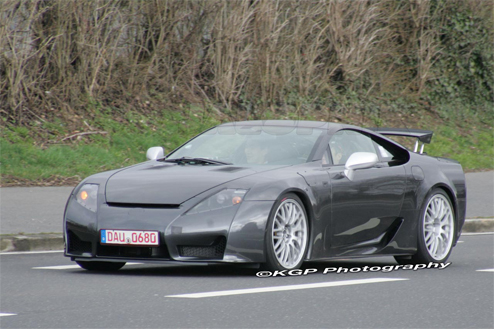
2054 Lexus Minority Report Sports Car Images

2054 Lexus Minority Report Sports Car

2054 Lexus Minority Report Sports Car

2054 Lexus Minority Report Sports Car

2054 Lexus Minority Report Sports Car

2054 Lexus Minority Report Sports Car
Sunday, November 1, 2009
Bet You Haven't Heard of This
Behold, quite possibly the best known car of the 1960s: the 1955 Lincoln Futura concept car.
 William Schmidt, Lincoln-Mercury's chief designer, supposedly came up with the design when he went scuba diving. He saw a shark cutting through the water and dreamed up a wide car with sharp fins.
Whatever the inspiration was, it worked. It has a very '50s futuristic feeling. Think the Jetsons stamped into angled, sharp metal.

The rear end just looks pissed, especially in color.
 It's going to eat anything that comes too close.
The interior is like any other concept car. It looks really cool, yet is incredibly impractical.
 The speedometer, odometer and every other possible instrument and idiot light is crammed into the middle of the steering wheel. All the dashboard controls were concealed behind rolling metal covers.
A compass is on the top of the driver's side of the dash and a clock on the passenger's side.
Oddly, this is one of the few driveable concept cars. Everything, even the instruments in the steering wheel, worked.
So how is this the best known car of the '60s? Because the Lincoln Futura became this:
 Yes. Lincoln built the original Batmobile. Kind of.
Instead of getting scrapped at the end of the '50s, George Barris bought it. When ABC called and needed a Batmobile in three weeks, Barris decided to modify the Futura.
 On closer inspection, it's fairly obvious. Barris just slapped on some extra fiberglass, some props and altered the front end a little.
He didn't even change the interior that much.
 Chop off half the steering wheel, change the instrument pod, and there you go.
Its good that the Futura managed to live on even if it had to get customized in order to survive. Most concepts from the '50s got scrapped. Even if it managed to survive that fate, history would've forgotten the Futura.
Instead it got a second life as a child's dream car. After all, who wouldn't want a jet powered two-seater?
 William Schmidt, Lincoln-Mercury's chief designer, supposedly came up with the design when he went scuba diving. He saw a shark cutting through the water and dreamed up a wide car with sharp fins.
Whatever the inspiration was, it worked. It has a very '50s futuristic feeling. Think the Jetsons stamped into angled, sharp metal.

The rear end just looks pissed, especially in color.
 It's going to eat anything that comes too close.
The interior is like any other concept car. It looks really cool, yet is incredibly impractical.
 The speedometer, odometer and every other possible instrument and idiot light is crammed into the middle of the steering wheel. All the dashboard controls were concealed behind rolling metal covers.
A compass is on the top of the driver's side of the dash and a clock on the passenger's side.
Oddly, this is one of the few driveable concept cars. Everything, even the instruments in the steering wheel, worked.
So how is this the best known car of the '60s? Because the Lincoln Futura became this:
 Yes. Lincoln built the original Batmobile. Kind of.
Instead of getting scrapped at the end of the '50s, George Barris bought it. When ABC called and needed a Batmobile in three weeks, Barris decided to modify the Futura.
 On closer inspection, it's fairly obvious. Barris just slapped on some extra fiberglass, some props and altered the front end a little.
He didn't even change the interior that much.
 Chop off half the steering wheel, change the instrument pod, and there you go.
Its good that the Futura managed to live on even if it had to get customized in order to survive. Most concepts from the '50s got scrapped. Even if it managed to survive that fate, history would've forgotten the Futura.
Instead it got a second life as a child's dream car. After all, who wouldn't want a jet powered two-seater?
Subscribe to:
Posts (Atom)


