Showing posts with label Honda Reviews. Show all posts

Monday, June 20, 2011

2012 Honda Civic Si Coupe - Road Test

Now Playing: Upsized and downrevved for the enthusiast of tomorrow.
BY JOHN PHILLIPS, PHOTOGRAPHY BY ROY RITCHIE May 2011

For the past six years, we’ve felt a little like Estragon and Vladimir in Waiting for Godot. So many hours have been lost debating whether the previous-gen Honda Civic Si produced enough power to hold its head above water in the pocket-rocket pond. Eventually, this existential controversy morphed into a kind of recreation, with Si devotees screeching fiery epithets from the bleachers. Well, finally, Generation Nine is upon us. “We’re saved!” shouted Beckett’s protagonists whenever they suspected Godot might momentarily appear.

Here’s a sad fact: Godot never showed. And whether the Si is “saved” likewise remains unclear.

Let us review recent history.

Our first encounter with the previous Si came late in calendar year 2005, when we pitted it against a Volkswagen GTI. The Honda lost. In 2009, we inserted an Si into a seven-car comparo, where it finished fifth, gasping and sweating. We weren’t surprised. The Si’s engine—2.0 liters, 197 horsepower, 139 pound-feet of torque—relegated it to least-powerful status in the whole segment. It certainly didn’t possess the grits to fend off, say, a 263-hp Mazdaspeed 3 Grand Touring or a 265-hp Subaru Impreza WRX. What’s more, accessing the Si’s horses has always required the spinning of the crank and cams to a fine fare-thee-well. The VTEC didn’t swap cam profiles until 6000 rpm, and it was thereafter vital to rely on every single rev right up to the colossal eight-grand cutoff.

Of course, Si purists—and trust us, they are legion—smugly insisted that the little howler-monkey engine comprised much of the car’s charm. Yet in the same breath, they’d also confess the coppery taste of  humiliation whenever a WRX achieved 60 mph 2.0 seconds in front of them, fast becoming a gnat on the horizon.

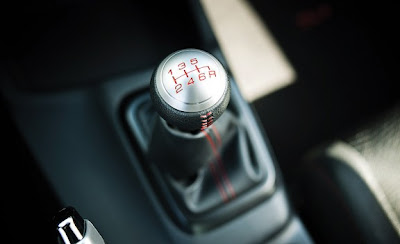
Now comes Honda’s solution for the ninth-gen Si, a solution both simple and a little surprising, given the rumors of a turbo. Out goes the 2.0-liter engine, in comes the naturally aspirated 2.4-liter unit that sees simultaneous duty in the Acura TSX. The result is an unnoticeable 4-hp gain, but torque is up 22 percent—peaking at 4400 rpm instead of 6100 rpm—and that’s a difference you can feel. While they were at it, the engineers paired the engine to the TSX’s delightful six-speed transaxle. But is that enough?

Well, sort of. At the track, the Si nailed 60 mph in 6.3 seconds versus the previous 6.7, and it proved a half-second quicker in our 5-to-60-mph rolling start. Turn off  the traction control, and you can now shred rubber for 15 feet, followed by a Rottweiler bark as you bang into second. An improvement, for sure, but it’s still shy of the accelerative thrust of five turbocharged competitors, including the Speed 3, the WRX, and even the GTI, which has a similarly meager 200 horses but can nonetheless summon 60 mph in 6.1 seconds.

On the other hand, the larger engine ushers in welcome perks. The mechanical thrash of the previous powerplant, for instance, is now largely MIA, and gear noise is likewise reduced, with all three of our sound-level tests confirming the fact. (Still, road-borne noise and tread roar remain issues that Honda must address.) Equally important, the number of shifts required for ’round-town cruising seems subjectively halved. In traffic, the Si is perfectly content relying on first, third, and fifth. And by eschewing a turbo, the Si’s mileage—now up to an observed 26 mpg—is best described as a charming achievement.

Yes, yes, 900 top-end revs have been lost. But the car now pulls with at least vague enthusiasm just after step-off. In fact, our only serious beef with the new engine is its considerable overrun when the throttle is suddenly dropped. Among other things, that makes for very little initial engine braking, and the revs sometimes take a couple of seconds to return to idle. Most drivers won’t complain, but it’s a behavior that lends the drivetrain a titch of laziness that has historically been anathema to Honda-think.

As with the previous-gen Si, this is among the most-neutral-handling front-drivers on the planet. Around our 15-mile public-road loop in southern Ohio, we could provoke only the most minor of nibbling understeer—and that was at speeds approaching Fear Factor Nine—with the rear tires faithfully following whatever paths had been established by the fronts. No rotation, no drifts, no drama. Body motions were exquisitely controlled, with the ride revealing the stiff springs and dampers only over high-frequency imperfections, primarily expansion joints and broken pavement.

At around-town speeds, the Si’s steering tends to feel artificial, as if it were the outcome of some sort of electrical/mechanical calculus that never precisely balanced. At least it’s light. As speed rises, fortunately, it firms up nicely and also becomes livelier. There’s no bump steer, no nervousness, and interstate tracking is peerless. The brakes are fade-free, and the pedal is firm and informative.

Moreover, the light, fluid shifter—as good as any that Honda has ever produced—allows the driver to summon alternate rev ranges with the flick of two fingers, abetted by a new lightweight clutch with simply seamless takeup. Faced with slow hairpins, the limited-slip differential carefully apportions power so that the inside front wheel never scrabbles. The thinly cushioned seats hold you firmly in place, and the dead pedal is perfectly sited. With lateral grip rising from 0.87 g to 0.90 g, the Si just dances and sings in the hills. This 2864-pound coupe is perfectly balanced, agile, poised, ever willing, a car that is easy to drive. Real fast comes real quickly.

The only obvious failure here is the unimproved interior. There are crass plastic trim bits on the steering wheel and around the HVAC controls. The Civic’s trademark minivan-sized windshield leans over a mini­van-sized dash, a vast plain of cut-lines, textures, and colors. The bunk-bed layout for the IP is okay, but the garish LCD gauges are right out of a RadioShack in Akron. The mouse-fur headliner suffers from the mange, and there’s a lumpy, wrinkled collar of felt that surrounds the steering column, shouting to one and all, “Yessir, that’s right, I actually am the cheapest bit of flotsam in the universe!” Note to Honda: Check out the Ford Focus’s interior.

The new Si—manual six-speed only—comes in both sedan and coupe forms. The coupe starts at $22,955, the sedan opens at $23,155, and both top out at $24,655. The only options are navigation, XM radio, and (exclusive to the coupe) summer tires—17-inch Michelin Pilot Exalto PE2s, as fitted on our test car. (Fun driving tip: Demand that your spouse call you “Pilot Exalto.”) If you’ve got a calculator handy, you’ll perhaps already know that a starter Si coupe is more than $1500 cheaper than either a GTI or a Speed 3.

This latest Si is more sophisticated than its forebear, although it has been somewhat cruelly left to play David to the turbocharged Goliaths. As of now, it offers a better ride, produces less noise, and is faster in both a straight line and through the most diabolical off-camber, double-apex turns that Ohio’s deranged civil engineers could conjure. It is surely less raw than its predecessor, a trait that many Si purists—including our own revered Tony Quiroga and Dan Pund—lament. Until they commit to a three-day, 800-mile road trip, two-thirds of which skates over frost-heaved interstates. No longer is the Si a one-trick pony. At speed it’s a serial killer, yet during commutes and city errands it’s a near-soothing mental-health counselor with practicality and a price that make it easy to justify.

And with that, as always, please feel free to express your unalloyed hatred.

Source;
http://www.caranddriver.com/reviews/car/11q2/2012_honda_civic_si_coupe-road_test

Tuesday, June 7, 2011

Honda Tuning: 1985 Honda CRX SI

Ah, Honda's glory days.... what a fun car....
1985 Honda CRX SI - CRX Memoirs
Although the first-generation CRX had been formally introduced during the 1984 model year, when Honda unveiled the Si model just 12 months later, enthusiasts realized that the brand’s little, performance-minded hatchback was better in almost every way.
From the June, 2011 issue of Honda Tuning
By Aaron Bonk


Thank the mid-’80’s mini-truck clubs for Honda performance as you know itcarefully tailored mullets, Ray-Ban Aviators, pegged jeans, and all. When you’re done, thank the ’85 CRX Si too. By 1985, mini-trucks were arguably a prevailing force among boy enthusiasts who denied more predictable domestic cars. As expected, testosterone-charged arcade meet-ups lost their luster as mini-truck clubs soon sought a more balanced male-to-female ratio. The fairer sex added an interesting and unexpected element to the equation thougharriving at events in smaller, easier to maneuver Ford Escorts, Volkswagen Rabbits, Nissan Sentras, Toyota MR2s, even Honda CRXs. Discriminating, newly enlightened mini-truckers traded their trucks for hatchbacksso many so that by 1989 Mini-Truckin’ magazine, for example, had a compact performance following so large it spawned the first-ever publication catering to sport compact enthusiasts: Sport Compact Car magazine. Sport Compact Car’s editors would later create Honda Tuning.
Honda’s CRX wasn’t the first sport compact enthusiasts cared about. Volkswagen’s early-’80’s Rabbit GTI overwhelmed much of the competition within a market that, frankly, had little rivalry. Although the first-generation CRX had been formally introduced during the 1984 model year, when Honda unveiled the Si model just 12 months later, enthusiasts realized that the brand’s little, performance-minded hatchback was better in almost every way.

American Honda had a difficult time convincing Honda of Japan to make the CRX available to U.S. consumers. The two-seater was designed for the world market, not Americans. Its essence was aimed toward young, economically conscious, city-dwelling Japanese who grappled with big-city traffic and nonsensical parking. Americans, who Honda’s analysts were convinced bought cars for legroom and impressive cubic-inch counts, were not who the company initially considered as viable consumers. Of course, American Honda was given the go-ahead and, from its first sales brochure and its first commercial, did something nobody expectedit solicited Honda’s all-new sport compact for exactly what it wasa sports car. This should come as no surprise; the Si acronym stands for Sport Injected after all. The media immediately pitted the angular-shaped, two-seater CRX against the GTI and MR2. The CRX delivered. Later, Honda’s CRX made Car and Driver magazine’s Ten Best list in 1985, among other accolades, like earning Motor Trend magazine’s Import Car of the Millennium title in 1990. Road & Track magazine went on to say that the Si had the sprit of an exotic.

Astute enthusiasts appreciated the high-revving Si’s modern fuel injection, taut suspension, precise steering, and ample braking, yet were left jaundiced by the fact that America never received the higher-output 1.6-liter, DOHC version the rest of the world had. To ensure exclusivity to the much-anticipated Acura brand that would launch later that year, and to the chagrin of CRX enthusiasts, twin-cam D-series engines were reserved solely for the upper echelon nameplate’s entry-level compact, the Integra. None of this mattered, though. Every CRX American Honda received sold.

For the rest of the article, follow the link;
http://www.hondatuningmagazine.com/features/htup_1106_1985_honda_crz_si_crx_memoirs/index.html

Thursday, May 5, 2011

Auto123: 2011 Honda Pilot Touring Review

By Michel Deslauriers
Thursday, May 05, 2011
Honda can, without a doubt, be considered an environmentally friendly car company. Their small cars, the Fit and the Civic, are versatile, fuel-efficient and produce low levels of CO2 emissions. Their hybrid models, the Insight and CR-Z, are extremely efficient. So how can they justify an 8-passenger SUV in their product line-up?

Well, it has to maximize fuel economy. It has to maximize interior space. And it has to avoid being perceived by the public as a dirty, socially-irresponsable truck. The Pilot manages to meet at least two of these three conditions.

Under the hood of the Pilot resides a 24-valve, 3.5-litre V6 that’s found in various Honda and Acura products. In this case, it gets cylinder deactivation systems across the model range and develops 250 horsepower as well as 253 pound-feet of torque. The sole transmission choice is a 5-speed automatic; Honda does have a 6-speed in the tool shed, which equips the Odyssey Touring and several Acura models, so why don’t they quit fooling around and put it in the Pilot?

Whatever. Zero to 100 takes 8.8 seconds, which isn’t bad by truck standards, but some of its rivals are quicker. As for fuel economy, our average of 13.2 L/100 km is decent but didn’t trigger any high-fives in the office. The Advanced VCM system, or Variable Cylinder Management, helps a little but isn’t a miracle worker.

The V6 is smooth while providing enough muscle for a tow rating of 4,500 pounds (or 2,045 kg). That’s better than the Mazda CX-9, but not as good as pretty much every other mid-size, 7- or 8-passenger SUV.

The VTM-4 all-wheel drive system works the front wheels under normal conditions, and sends up to 70 percent of engine torque back to the rear during acceleration or when wheel slippage is detected. The system can be locked in four-wheel mode with the help of a dash-mounted button, but it only works under about 30 km/h.

The Pilot is a trooper on the highway, but the driving experience is tarnished by a steering rack that doesn’t send up enough road feel. Change lanes on a snowy day, and you’ll barely feel that strip of slush as you merge back into the slow lane; it should be more communicative.

The cockpit’s overall appearance is industrial-strength robust, although the dash piece seams at the top of the centre stack spoil it a little. It takes a few days to get used to the climate control switchgear, while the sound system includes a USB port in the Touring trim only; however, you can flip through music folders by holding down the song-skip buttons on the wheel, which is practical. Oh yeah, the rear-seat DVD with wireless headphones works beautifully for the kiddies.

We’re a little less enthusiastic about the navigation system. While relatively easy to use, spelling out a city or a street name by turning the system’s control knob isn’t a quick operation. The navigation display’s crude graphics makes me feel like I’ve fired up my Super Nintendo console.

Space-wise, the Pilot’s interior is muy grande. All three rows can accommodate adults, a pretty rare accomplishment in this vehicle category. Imagine a bus built by Honda, and it would look a lot like the Pilot. The Touring trim also benefits from heated front and outboard second-row seats. Visibility all around is great, and the truck’s narrow turning radius makes it easy to park.

Cargo space with the second and third rows of seats folded amounts to 2,464 litres; that’s bigger than in the Ford Explorer and Nissan Pathfinder, but smaller than in the Mazda CX-9 and way smaller than in the Chevrolet Traverse/GMC Acadia twins. The tailgate window can also be opened separately.

In general, though, the Pilot feels solid. Not just solid, but Tonka truck durable. The Pilot’s squared-off look doesn’t offend anyone, and the truck’s front fascia also makes it socially acceptable because it looks sympathetic, not truckish.

The entry price for a LX 2WD model is $34,820 before tax, freight and delivery charges. The Touring version we’re driving this week escalates the price ladder like the yodeling mountain climber in The Price is Right, reaching $48,420. Ouch.

But wait. Similarly-equipped rivals are also a wallet-drain. A Chevrolet Traverse 2LT AWD costs $54,720. A Mazda CX-9 GT AWD costs $49,790. A Nissan Pathfinder LE costs $52,548. A Toyota 4Runner Limited costs $49,665. A Dodge Durango Crew Plus costs $48,995. Actually, only the $46,999 Ford Explorer Limited and the $44,900 Toyota Highlander Limited are cheaper, although the latter doesn’t offer a rear-seat DVD.

With every passing year, the competition gets better and better, and the Pilot needs to stay in the game. In typical Honda product mid-cycle fashion, a facelift should arrive in 2012; we’ll see what other changes will be made.

Still, the Pilot is a competent, practical SUV that’s easy to live with. It maximizes interior space, it arguably consumes a reasonable amount of fuel, and its lack of aggressiveness prevents it from being conceived as an environmentally-unfriendly vehicle. Can the Pilot justify its presence in Honda’s line-up? We think so.

Source;
http://www.auto123.com/en/honda/pilot/2011/review?carid=1112301205&printable=1&artid=130547

Monday, January 31, 2011

Canadian Driver: Used Vehicle Review: Honda Civic, 2006-2011

By Chris Chase
The eighth-generation Honda Civic hit the market in 2006, and made a bit of a splash when it did, with its wedgy exterior and modern interior, including a controversial split-level dashboard. Nevertheless, the Civic remained one of the most popular cars on the market and largely retained its reputation for being a dependable form of transportation.

If you bought a Civic in 2006, you got a compact sedan or coupe powered by a 1.8-litre, four-cylinder engine making 140 horsepower in all trims save the Si coupe and Hybrid. The Si got a 2.0-litre, 197-hp motor, while the Hybrid used 1.3-litre engine paired with an electric motor for a net horsepower power rating of 110. Regular-grade Civics came standard with a five-speed manual transmission that could be optioned to a five-speed automatic. The Si used a six-speed manual exclusively and also got a limited-slip differential; the Hybrid came with a continuously variable transmission (CVT) as the only one available.

In 2008, an Si sedan was added to the line-up. Some upper trim models got stability/traction control in 2009.

Natural Resources Canada’s fuel consumption ratings for the 2006 Civic were 7.8/5.7 L/100 km (city/highway) for the 1.8-litre model with manual transmission, or 8.2/5.7 with the automatic. The Hybrid was rated at 4.7/4.3, and the Si at 10.2/6.8. These figures would remain the same through the eighth-gen Civic’s run, to 2011.

Reliability on the whole has been good, earning the Civic inclusion on Consumer Reports’ list of used car “good bets.” It’s not without fault, however, particularly the hybrid model.
Consumer Reports’ data on the Civic shows electrical system problems with the Hybrid powertrain. These include the IMA (Integrated Motor Assist) warning light turning on, indicating a problem with the battery or the software that manages the IMA system. Here’s a thread talking about how high ambient temperatures and hot weather can negatively affect the Civic Hybrid’s battery pack. The battery packs themselves appear to be pricey; I’ve seen figures upwards of $3,000 for replacement (including labour) mentioned in more than one forum.
There’s also an IMA software update mentioned frequently that apparently causes driveability issues after it’s installed in the car’s CPU. Apparently, this is due to the system needing to recalibrate itself, but kills the electric assist function in the process, making the car slow, and dangerously so, say some owners.

If the check engine, IMA and battery light come on and the car loses electric assist (runs on the gas engine only), a common, and simple, cause is a weak 12-volt battery (just like the one every car has). If this battery is bad, it frequently causes the car’s sensitive electronics to go haywire.
Here’s a Civic Hybrid FAQ from CleanMPG.com.

I’ll go out on a limb and say that the Honda Civic Hybrid is one to approach with caution, especially used, and even more so if the hybrid system warranty is close to expiry. A couple of posters in this GreenHybrid.com thread call their 2007 Civic Hybrids the worst cars they’ve ever owned.

With that out of the way, non-hybrid Civics have fared much better, suffering only from relatively minor problems.

There’s a common problem with the Civic Si’s transmission that causes grinding and hard shifting into third gear, and a shifter that pops out of third. This prompted the folks at 8thCivic.com to draft a (poorly written) petition in an effort to get Honda to acknowledge the problem. The company eventually did, by issuing a Technical Service Bulletin (TSB) advising dealers on how to fix the bad transmissions.

A popping sound from the front suspension, a problem that appears to affect mostly 2006, 2007 and a few 2008 Civics, is caused by an incorrectly manufactured bump stop. Honda addressed this in 2007, with the TSB that can be found here.

Read this thread for a few details about a rear suspension problem – bad upper control arms – that seems to affect only the Hybrid.

This thread indicates that some Civic owners have experienced head gasket failures. There’s no evidence of this in Consumer Reports’ data, though.

The two-door Civic earned a “good” rating in the Insurance Institute for Highway Safety’s (IIHS) frontal offset crash test, and an “acceptable” score in side impact testing, with the IIHS citing a possibility of rib and pelvis fractures for front seat occupants. The four-door model scored “good” in both tests, but the IIHS noted that there was still a small possibility of rib fractures for front-seat riders.

From the National Highway Traffic Safety Administration (NHTSA) gave Civic two- and four-door models five stars for driver and front passenger protection in its frontal crash test, and four and five stars for front and rear seat protection in side impacts, respectively.

Used Civic pricing, from Canadian Black Book (CBB), shows these cars have held their value well, as is the Honda way. At the low end is a 2006 DX coupe, at $8,150, or $8,625 for a DX sedan; for bigger budgets, a 2010 sedan in top EX-L trim is worth $20,200. The Si’s values range from $15,525 for a 2006 coupe, to $21,300 for a 2010 sedan (the coupe is a bit cheaper), and the Hybrid starts at $10,750 for a 2006 and ranges up to $17,075 for a 2009. (CBB doesn’t have pricing info for the 2010 Hybrid.) For middle-ground shoppers, a 2008 LX is worth $14,450.

As stated above, the Civic Hybrid is a car to avoid, or at least, consider very carefully when shopping for a fuel-thrifty vehicle. The rest of the Civic line has held up well, earning consistent above-average used vehicle reliability ratings from Consumer Reports, with few, if any, serious trouble spots. Regardless, look for a car with detailed service records and have it checked out by a trustworthy mechanic before buying.

Source;
http://www.canadiandriver.com/2011/01/27/used-vehicle-review-honda-civic-2006-2011.htm

Friday, January 21, 2011

Road and Track: 2011 Acura TSX Wagon Review


Hatching a plan for sporty, stylish and practical transport.
By Douglas Kott

What’s Hot:
Tight handling
Swoon-worthy styling
Crossover carrying capacity
What’s Not:
No V-6 offered
No manual gearbox offered
Inline-4 merely adequate

Small, sporty wagons are a little like Elvis or Colin Chapman: By most accounts they’re dead, but occasionally there will be sightings. Truth is, we wonder why there aren’t more of them as they’re likable adversaries to sport utes and crossovers, lacking the tippy “command” seating position and pretense of off-road capability yet endowed with car-like handling and truly useful cargo capacity. Consider that Acura’s latest here has a storage volume aft of the rear seats that’s roughly the same as its RDX crossover, albeit differently shaped. With its 60/40-split rear seats folded down, there’s a full 60.5 cu. ft. of space, which slots the TSX slightly ahead of marketplace rivals Audi A4 Avant and BMW 328i Sport Wagon.

Acura chose not to compare acceleration times in its presentation, as the TSX Sport Wagon comes just one way, with a 201-bhp 2.4-liter inline-4 paired with a paddle-shift torque-converter 5-speed automatic. Let’s just say the combination makes for, er, adequate acceleration with, um, reasonable roll-on torque, the quick-reacting gearbox doing its best to keep the engine in the feel-good upper half of the rev range. Shifts are snappy….with the selector in S, both kickdown reaction and throttle response are really crisp, and shifts summoned by the paddles are laudably fast. The only transmission demerit? There’s no auto-blip on downshifts.
On a twisty road, the TSX Sport Wagon carries its additional 130 lb. and 3.5 in. of length well, the extra rear overhang reducing the nose-heaviness by a couple of percentage points…now 57/43 front/rear, versus roughly 59/41 for a comparably equipped TSX sedan. The electric-assist steering weights up nicely as more steering angle is cranked in, and roll control is excellent, with spring/damping rates definitely skewed toward the sportier end of the spectrum.

The same could be said of looks. With its wedgy beltline, snazzy 17-in. alloys (with P225/50R-17 Michelins) and brightwork for both the sturdy roof rails and side window trim, the Sport Wagon appears anything but utilitarian. Up front, the oft-criticized “Power Plenum” grille has been tastefully toned down—it now has a platinum-look horizontal element ringed with chrome.

Inside, all the standard TSX trimmings are there—thick-rimmed sport wheel, futuristically styled center stack, and great seats with perforated leather inserts and substantial up-high shoulder bolstering. The cargo area is well finished also; dual brushed stainless sill plates for the hatch are a nice touch, as are chrome tie-down hooks and a total of four hidden storage spaces beneath and to the left side of the load floor. The main compartment is square and quite shallow, perfect for shady types involved in the pizza smuggling trade.

Across the model line, all TSXs for 2011 benefit from slightly better fuel economy (the Sport Wagon’s numbers are 22/30 city/hwy) through measures such as low-friction engine coatings, lower-viscosity ATF, an ATF heater (!) and underbody fairings that improve aerodynamics. A noise-insulating windshield and thicker rear side glass are said to further reduce cabin noise. And the Sport Wagon featured here has a generous roster of standard equipment including a power moonroof, heated leather seats, a 360-watt 7-speaker sound system, Bluetooth, etc. Opting for the Tech Package ($3650 dearer than the base Sport Wagon’s MSRP of $30,960) buys the excellent nav system/high-def display screen, the 460-watt ELS sound system with hard drive storage for roughly 3500 songs, and a power tailgate.

Acura’s sales goals are modest for the Sport Wagon, about 4000 units for the 2011 model year. With its slick styling, sporty road manners and considerable utility, this tailgated TSX might jump-start the resurgence of the small sporty wagon. Is it possible that Elvis has re-entered the building?

Source;
http://www.roadandtrack.com/tests/impressions/2011-acura-tsx-sport-wagon
Related Posts Plugin for WordPress, Blogger...